Shape & detail / FREE CALCULATOR
Pleat fabric calculator
Plan the fabric width for evenly repeated knife or box pleats. Enter the finished width, number of pleats and fold depth, then get the cutting repeat and its boundaries.
Make your calculation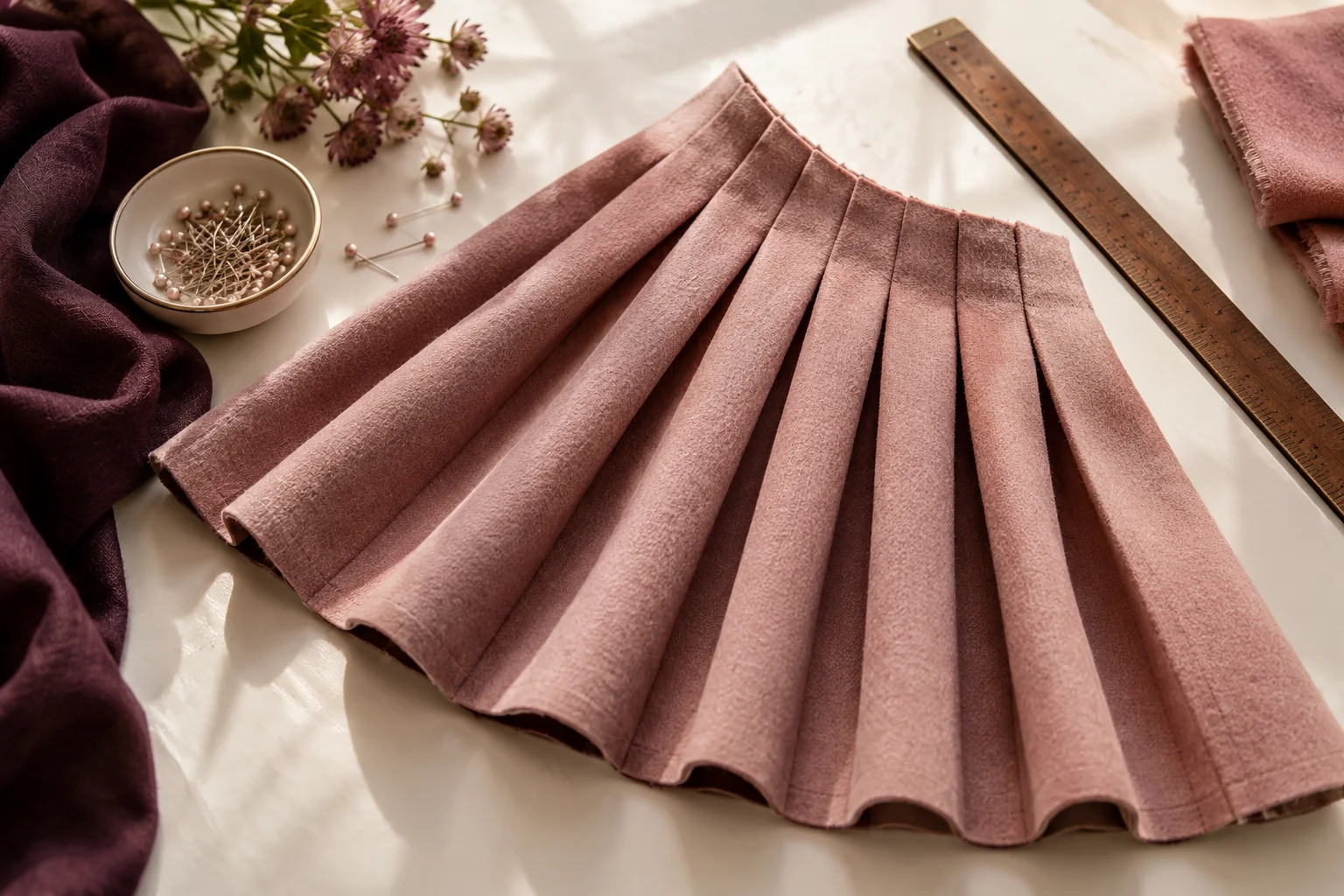
HOW IT WORKS
Choose knife or box pleats and your finished width.
Enter the count and the depth of each folded return.
Use the fabric width and repeat boundaries to prepare a sample.
THE WORKING BEHIND THE NUMBER
A little more clarity.
THE METHOD
Knife: hidden width per pleat = 2 × fold depth. Box: hidden width per pleat = 4 × depth of each opposing fold. Cut width = finished width + total hidden width + both edge allowances.
Make the depth definition explicit
Pleat terminology can describe a visible width, a fold depth or the full fabric consumed by a fold. In this calculator, depth means one turned-under return. A knife pleat uses two times that depth in hidden fabric. A box pleat has two opposing returns and uses four times the entered depth.
The finished width is divided equally by the number of pleats to give the visible repeat pitch. The tool then adds the hidden fabric to calculate each cutting repeat. Edge allowances sit outside the first and last repeats.
Test a repeat in the real material
Use a short sample to confirm your intended fold arrangement and the direction in which each fold will lie. Thickness, pressing and stitching can affect the look even when the paper arithmetic is correct. The calculator does not compensate for turn-of-cloth or fabric stretching.
The output table marks the start and end of each complete repeat from the left cut edge. It does not replace the individual fold lines on a chosen pattern. Shaped panels, overlapping pleats and designs with unequal spacing need their own layout.
A FEW USEFUL ANSWERS
Before you cut.
Why does a box pleat need more hidden fabric?
The definition used here gives a box pleat two opposing folded returns. At the same depth per return, it consumes twice the hidden fabric of one knife pleat.
Does this assume three-times fullness?
No. Fullness follows from the depth and pitch you enter. A particular choice can produce three-times fullness, but it is not forced.
Are the table positions fold lines?
They are cutting repeat boundaries. Use your pattern or tested pleat sample to mark the folds within each repeat.
The reference shelf
Further reading on the construction or method. Calculator-specific assumptions are explained above.