Fabric & cutting / FREE CALCULATOR
Fabric yardage calculator
Estimate fabric for your measured pattern pieces. Add their bounding dimensions, choose your fabric width, and get a grouped row plan with a purchase length in metres and yards.
Make your calculation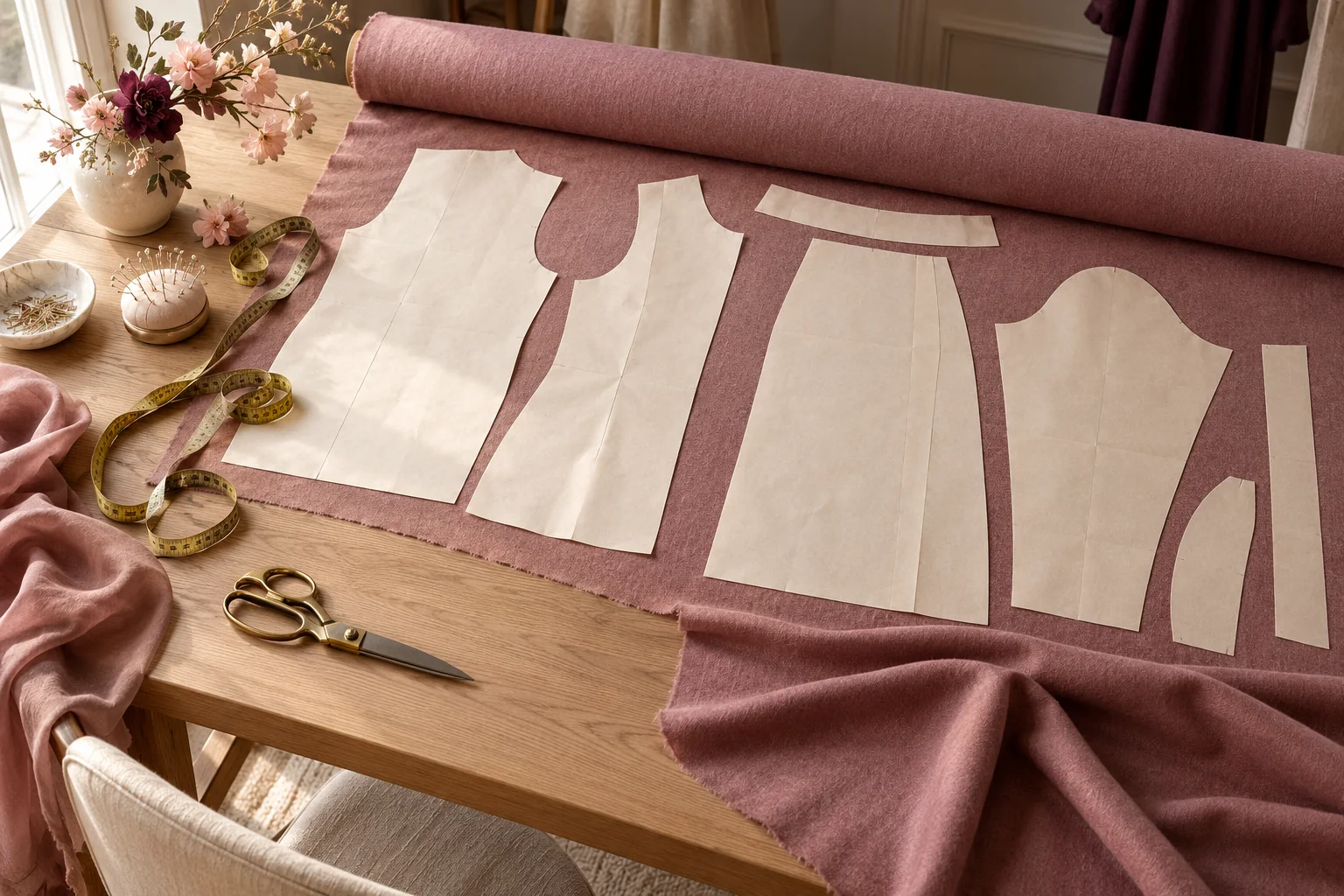
HOW IT WORKS
Measure the cut-piece rectangles, including allowances.
Enter usable fabric information and any measured shrinkage.
Read the row plan, then check it against your real cutting layout.
THE WORKING BEHIND THE NUMBER
A little more clarity.
THE METHOD
Usable width = full width × (1 − width shrinkage) − edge reserve. Rows per group = round up(quantity ÷ pieces across). Purchase length = grouped row lengths × (1 + extra allowance) ÷ (1 − length shrinkage).
Use a measured pattern, not a size label
A garment size cannot identify the exact amount of fabric a pattern will use. Start with the actual cut pieces and include seam and hem allowances in their bounding rectangles. Count every piece you need to cut, including mirrored pairs. A piece cut on a fold should be entered at its opened-out width for this rectangular planning method.
The calculator gives each piece group separate rows. It does not tuck small pieces into gaps beside larger ones. That makes the result transparent and often conservative. Compare the table with a paper layout if your fabric is expensive or your pattern has large curved areas.
Account for the character of the cloth
Keep a consistent grain direction for every group. The lengthwise repeat setting reserves whole repeat blocks, but it does not choose which motif lands at a seam or centre front. Directional velvet, checks and large prints need that extra placement decision on the real pattern.
Use shrinkage measured from the same cloth and care process. The width is reduced before the cutting rows are planned; length compensation is applied to the finished estimate. The extra cutting allowance is an editable planning choice rather than a universal recommendation.
A FEW USEFUL ANSWERS
Before you cut.
Does this tell me yardage for any dress or suit?
It estimates the pieces you enter. It does not infer a whole garment from body measurements or a size label. Add every necessary pattern group and account separately for lining or a different fabric.
Why is my pattern piece too wide?
Its entered width exceeds the usable width after width shrinkage and the edge reserve. Choose wider fabric or revise the layout with your pattern; the tool will not silently rotate a piece against its grain.
Why might a real cutting marker use less fabric?
A skilled marker can nest curved pieces and place different groups beside each other. This calculator keeps groups in separate rectangular rows so you can see how the estimate is built.
The reference shelf
Further reading on the construction or method. Calculator-specific assumptions are explained above.