
THE SHORT ANSWER
Start with a comfortable top, a bottom that lets you move and shoes suited to the day. Add a practical layer and bag, then check the whole outfit against the weather and occasion.
01 /
What is casual style?
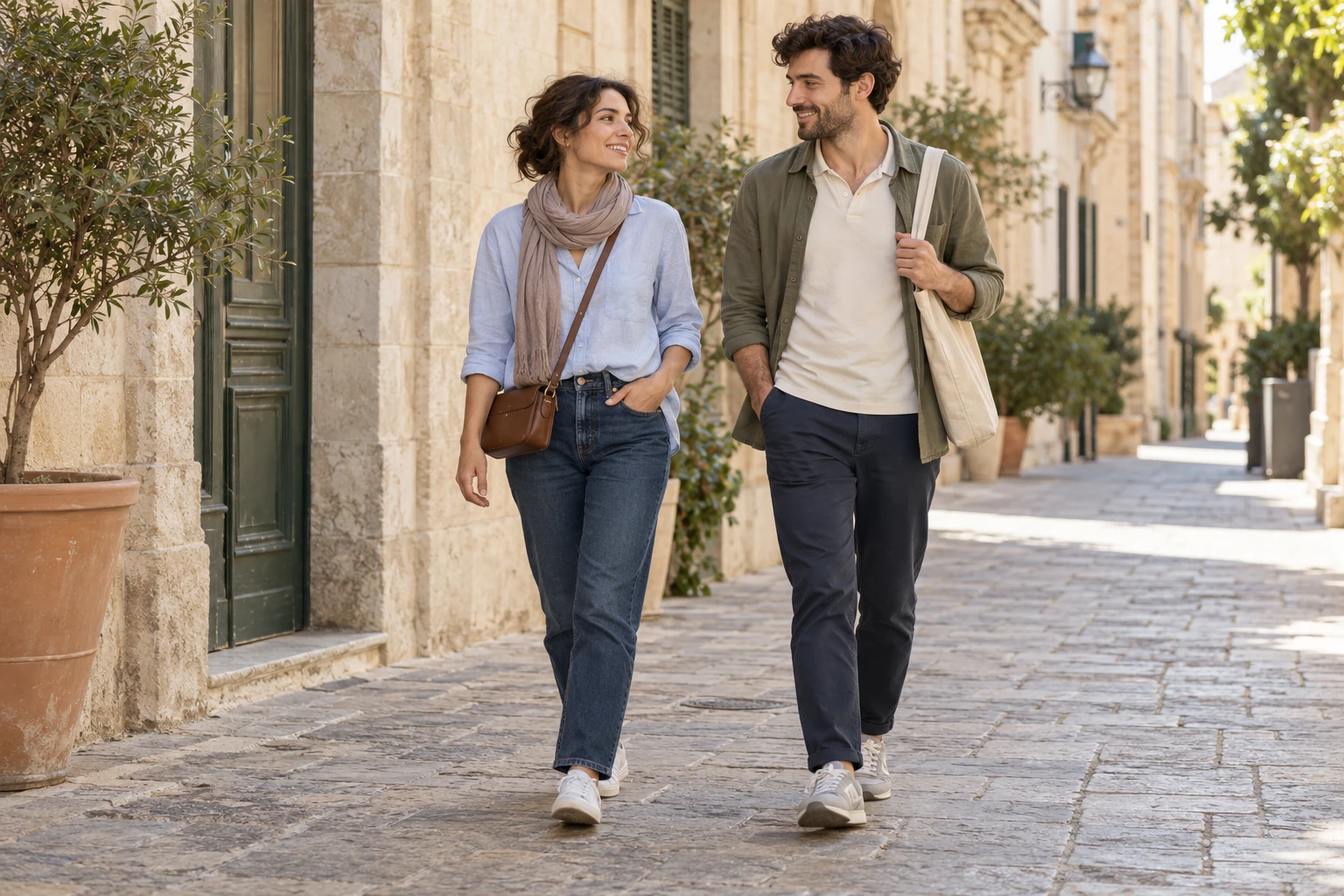
A cotton shirt, straight jeans and shoes you can walk in: that is already a casual outfit. Fit, condition and a few considered choices give it a more finished feel.
Casual style is relaxed everyday dressing, with enough room to sit, walk and get on with your day. T-shirts, denim, chinos, knitwear and uncomplicated dresses all belong here. There is no required age, body shape or price point. Your level of coverage is a preference, not a barrier to the style.
Research notes: [1]
02 /
Fabrics and shoe materials: choose for the day you have
Read the label, then handle the fabric. Fibre content is only part of the story: weight, weave, lining and cut change how a garment feels. Denim is a twill fabric and jersey is a knitted construction; neither word tells you the complete fibre composition.
| Material or construction | Useful for | What to check |
|---|---|---|
| Cotton poplin or jersey | Shirts, blouses and T-shirts | Opacity, seam twist and the care label. A dense cotton shirt can feel very different from an open, light one. |
| Linen or a linen blend | Warm-weather shirts, trousers and dresses | Airy construction and room to move. Expect some creasing; a blend may change the drape and care needs. |
| Denim and cotton twill | Jeans, chinos, overshirts and jackets | Weight, stretch recovery and comfort when sitting. A small stretch content does not guarantee a good fit. |
| Wool or merino knitwear | Cool-weather jumpers and cardigans | How it feels against your skin and whether you can manage the washing instructions. |
| Sweatshirt fleece or brushed jersey | Sweatshirts, hoodies and relaxed layers | Fibre blend, bulk under a coat and whether the surface pills easily. |
| Canvas or textile shoe uppers | Everyday trainers and light summer shoes | A flexible fit, a suitable sole and how the shoes clean and dry. |
| Smooth leather, suede or coated alternatives | Loafers, boots, belts and bags | Lining, flexibility, closure and care. Suede needs weather-appropriate protection; a material name alone does not make a shoe waterproof. |
03 /
An easy colour palette for casual outfits
Start with clothes you already wear together. Navy, cream, grey, denim blue and brown make a useful base; black works just as well if you prefer it. Sage, olive, dusty pink or burgundy can be a small accent rather than a reason to replace the rest of your wardrobe.
Try cream trousers, a pale-blue shirt and brown loafers; or dark denim, an ecru T-shirt and a sage overshirt. The bag and shoes can echo each other without matching exactly. There is no compulsory casual colour palette.
- Begin with two or three colours if coordinating feels difficult; treat this as a starting point, not a rule.
- Repeat one colour in a small detail such as a belt, scarf or bag strap.
- Use texture for variety: denim, a smooth shirt and a fine knit do not need three different prints.
- Check the outfit in daylight, including whether pale fabric becomes see-through.
04 /
Five checks before you leave
- Sit and reach. Waistbands, shoulders and thighs should allow the movement your day needs.
- Check hems with the actual shoes. Trouser fabric that drags on the floor is a practical problem; a hem you prefer is a styling choice.
- Try the outer layer on. Sleeves should fit over the layer beneath without pulling.
- Look at the shoes and bag. Clean what needs cleaning, check fastenings and carry only what the bag holds comfortably.
- Choose the coverage and proportions you like. A long shirt, loose trousers and a scarf can be as casual as a T-shirt and jeans.
05 /
Where casual works — and when to check first
Errands, lectures, informal cafés, travel and visits to friends usually leave plenty of room for casual clothes. The useful question is what you will do there: walk for an hour, sit on a train or move between outside heat and air conditioning.
| Situation | A useful approach |
|---|---|
| Everyday errands or campus | A washable top, jeans or chinos, a practical bag and comfortable shoes. |
| An informal meal or relaxed office | Consider a collar, a fine knit or an unstructured jacket. Check the venue or employer’s guidance. |
| A job interview or important client meeting | Ask about the dress code. A generally casual workplace does not settle what is expected for that appointment. |
| A wedding, formal dinner or black-tie event | Follow the stated dress code; ordinary casual clothes or a casual blazer are not a substitute. |
| Long walks, rain or activity-specific work | Prioritise the footwear, weather protection or protective clothing the activity actually requires. |
Research notes: [1]
06 /
Common casual-style mistakes — and simple fixes
- Buying a top without a complete outfit in mind. Check that it works with two bottoms you already own.
- Keeping a fit problem because the label says “relaxed”. Repair, alter or replace only if the piece does not work for you.
- Ignoring stretched necklines, loose buttons or a hem that catches underfoot. Small repairs often help more than another purchase.
- Expecting one pair of shoes to work for every activity. A trainer suitable for a café may not suit a wet walking route.
- Wearing every favourite statement piece at once when you wanted a quieter look. Keep one focal point and simplify the rest if the combination feels too busy.
- Treating sportswear, oversized shapes or bright colours as automatically wrong. They are choices; check their condition and suitability for your plans.
- Choosing the fibre name but ignoring a heavy lining, uncomfortable seam or impractical care routine.
07 /
Casual vs classic casual: what changes?
Classic casual describes a restrained version of everyday dressing: familiar cuts, simple details and pieces you can keep combining. It is a styling description, not a universally fixed dress code. Smart casual, by contrast, is often an expectation set by a host or venue; interpretations still vary.
| Detail | Casual | Classic casual |
|---|---|---|
| Top | A plain tee, sweatshirt or easy shirt | A simple shirt, polo or fine-gauge knit |
| Bottom | Jeans, chinos or relaxed trousers | Straight dark denim, chinos or softly tailored trousers |
| Layer | An overshirt, denim jacket or casual coat | A cardigan, plain jacket or unstructured blazer |
| Shoes and bag | Trainers and a canvas tote or backpack | Understated trainers, loafers or simple boots; a pared-back bag |
| Colour and detail | As expressive or quiet as you like | Often a smaller palette with fewer prominent details |
08 /
A casual wardrobe for women: warm and cold weather
Use this as an edit of your own wardrobe, not a shopping checklist. Start with two or three tops you like, one pair of jeans, one other comfortable bottom, a useful layer and shoes for the walking you do. Add a dress or skirt if you enjoy wearing one.
| Season | Clothes and trousers | Shoes, bag and accessories |
|---|---|---|
| Warm weather | Cotton tee; light shirt or blouse; linen-blend or other airy trousers; straight jeans for cooler days; optional midi dress or skirt. | Light trainers or supportive sandals; a washable tote or cross-body bag; a belt, sunglasses and an optional light scarf. |
| Cold weather | A long-sleeved top; jumper or cardigan; jeans or warmer trousers; a coat or insulated jacket suitable for your climate. | Boots with a suitable sole; a bag that sits comfortably over a coat; scarf and gloves when needed. |
| More coverage | A long shirt or simple manteau over straight or wide trousers; an optional long dress and headscarf. Keep layers light enough for the weather. | The same practical shoes and bags; check that the hem and scarf ends do not get in your way. |
| A more classic finish | A simple collared shirt, softly tailored trousers and an unstructured jacket. | Loafers or clean understated trainers, a plain belt and a simple shoulder bag. |
09 /
A casual wardrobe for men: warm and cold weather
Two tees, a polo or casual shirt, jeans, chinos and one light layer cover many ordinary days. Pick colours that already make sense together. A sweatshirt and a fine knit can share the same wardrobe; you do not need to choose a single version of casual.
| Season | Clothes and trousers | Shoes, bag and accessories |
|---|---|---|
| Warm weather | Light cotton tee; polo; linen or other breathable shirt; chinos or airy trousers; optional plain shorts where appropriate. | Light trainers, loafers or suitable sandals; a simple tote or cross-body bag; belt and sunglasses. |
| Cold weather | Long-sleeved shirt; jumper, cardigan or sweatshirt; jeans or heavier chinos; a suitable coat or insulated jacket. | Weather-appropriate boots or trainers; a practical backpack or shoulder bag; scarf, hat and gloves when useful. |
| Changing temperatures | An overshirt or light jacket worn over a tee; trousers that work indoors and outside. | Shoes you can walk in; a bag with room for the layer you may remove. |
| A more classic finish | A blue or white shirt, navy chinos and a fine knit or unstructured jacket. | Plain loafers or simple lace-ups, a quiet belt and a pared-back bag. |
10 /
Eight casual outfit combinations for women
These combinations show how the same pieces can work across a week. Swap any item for an equivalent that suits your body, coverage preferences and local weather.
| Season and plan | Wear together |
|---|---|
| Warm: errands | Ecru cotton tee + straight jeans + light trainers + cross-body bag. |
| Warm: a café | Pale-blue blouse + sand airy trousers + loafers + shoulder bag. |
| Warm: a day out | Cotton midi dress + comfortable sandals + light tote + sunglasses. |
| Warm: more coverage | Long linen-blend shirt or light manteau + loose trousers + low-profile trainers + optional light headscarf. |
| Cool: campus | Striped shirt + dark jeans + cardigan + trainers + backpack. |
| Cool: a casual dinner | Fine knit + navy trousers + unstructured blazer + loafers + small shoulder bag. |
| Cold: city errands | Warm jumper + jeans + suitable coat + grippy boots + cross-body bag. |
| Cold: more coverage | Long coat or warm manteau + straight trousers + ankle boots + scarf and roomy shoulder bag. |
11 /
Eight casual outfit combinations for men
| Season and plan | Wear together |
|---|---|
| Warm: everyday | White tee + blue jeans + simple trainers + canvas tote. |
| Warm: a café | Light-blue shirt + cream chinos + loafers + plain belt. |
| Warm: campus | Navy polo + sand trousers + light trainers + backpack. |
| Warm: an informal weekend | Short-sleeved shirt + plain shorts, where appropriate + comfortable trainers + sunglasses. |
| Cool: a day out | Tee + open overshirt + dark jeans + trainers + cross-body bag. |
| Cool: classic casual | Grey fine-knit jumper + navy chinos + loafers + simple belt. |
| Cold: city errands | Knitwear + dark jeans + suitable coat + grippy boots + backpack. |
| Cold: an informal meal | Button-down shirt + warm trousers + cardigan or jacket + simple leather shoes + shoulder bag. |
12 /
Put it together: start with five outfits, not a new wardrobe
Lay out three tops, two bottoms and two pairs of shoes you already use. Make five complete outfits for actual plans in your coming week, including the outer layer and bag. Try each one on, sit down and walk a little. Keep the combinations that feel right.
If something is missing, name the problem before buying: a hem needs shortening, a layer is too warm, or a bag will not hold your essentials. A useful casual wardrobe grows from those small decisions. Comfortable clothes, a workable fit and attention to the occasion will do more for your day than following a rigid set of style rules.
Explore your proportions and fit preferencesA LITTLE SOMETHING TO TAKE WITH YOU
Make it your own.
Try these steps with what you already have. Tick them off as you go.
BEFORE YOU GO
A few good questions.
Is casual style the same as sportswear?
No. Casual describes everyday dressing, while sportswear is designed around activity or sport. A hoodie or trainer can appear in either; the whole outfit and the setting decide how it reads.
Can I wear casual clothes to work?
Only if they meet your employer’s dress code and the needs of that day. Ask about expectations for meetings, customer-facing work and safety requirements.
Are casual and classic casual different dress codes?
Classic casual is usually a styling description for simple, familiar pieces. It is not a fixed formal category. If a host names a dress code, use their guidance rather than this label alone.
Can a modest outfit be casual?
Yes. Long shirts or a simple manteau, loose trousers, longer dresses and an optional headscarf can all be worn casually. Choose weight, coverage and layers for your climate.
How many clothes do I need for a casual wardrobe?
There is no required number. Start with pieces you already use and make five complete outfits for a real week. Add something only when you can name what is missing.
The reference shelf
Sources behind the factual context. Outfit ideas and checklists are original ModenZ editorial guidance.
- 1. Emily Post — Attire Guide (opens in a new tab)Reference for distinctions between casual, dressy casual and formal dress codes; checked 24 October 2026.
- 2. Alliance for European Flax-Linen & Hemp — Flax performance and properties (opens in a new tab)Industry research on linen airflow and moisture handling; performance depends on the tested fabric.
- 3. Woolmark — Return to Real (opens in a new tab)Industry explanation of wool moisture-vapour management and insulation; no single fibre suits every wearer.
- 4. CottonWorks — Cotton product technology (opens in a new tab)Examples showing how construction and finishing change cotton performance; not all cotton has these finishes.